24 Hour Call Out Electricians
EICR Testing & Electrical Safety Certificates in Rye
Need an Electrical Installation Condition Report quickly? Whether it's for a tenancy, a sale or after a fault, we inspect, test and report without the long wait.
- For landlords, sellers and homeowners
- Inspection and testing of the whole installation
- A clear report on what we found
- Clear pricing before we start
When it's urgent
When you need an urgent EICR
An EICR is a full check of the fixed wiring in a property. These are the situations where people need one fast.
New tenancy
Landlords in England need a valid EICR before tenants move in, and at least every five years after that.
Buying or selling
A report gives buyers and sellers a clear picture of the electrics before contracts are exchanged.
After a fault or fire
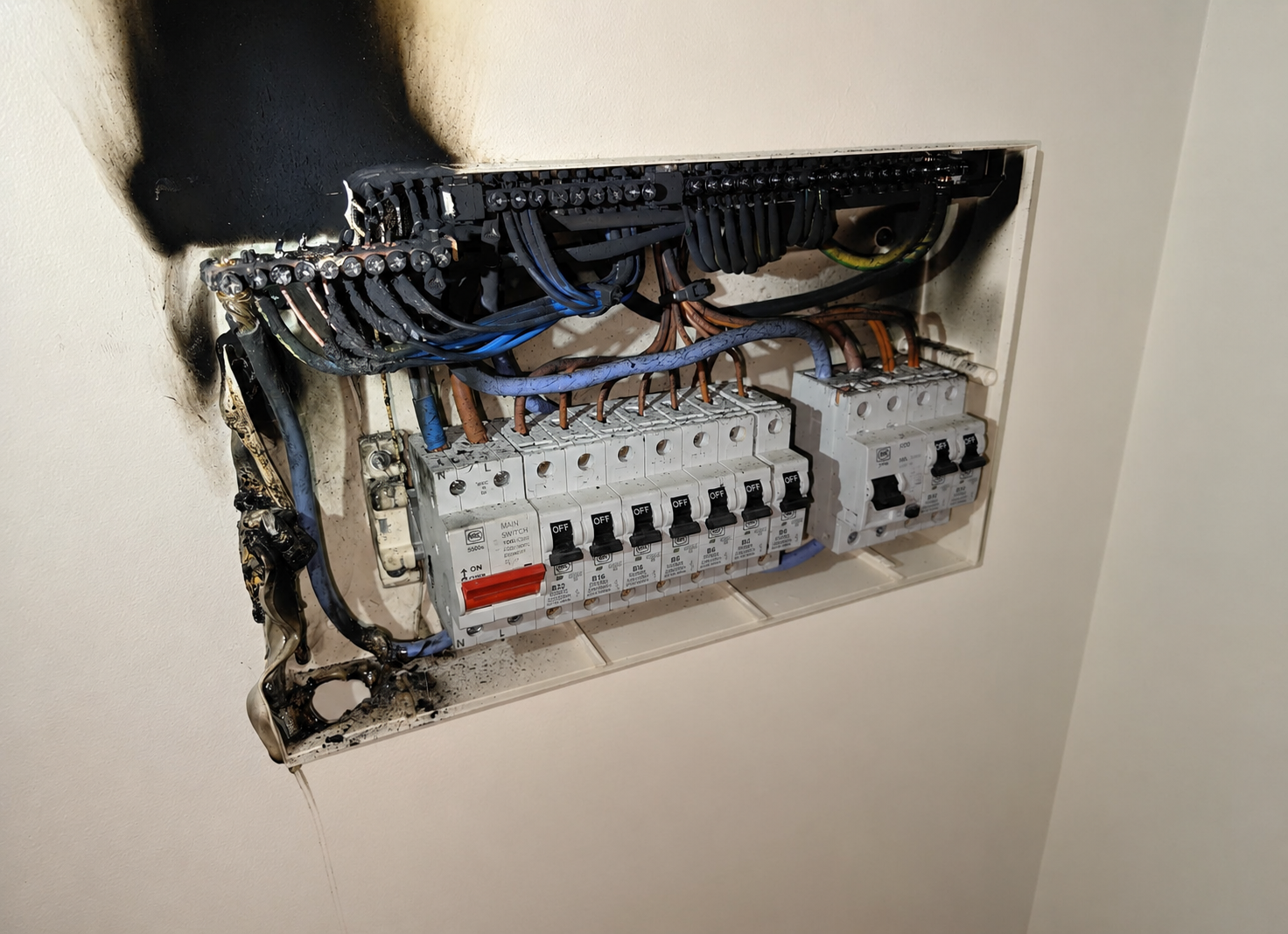
If something has gone wrong, a full test shows whether the rest of the installation is safe.
After a flood or leak
Water can damage wiring you can't see. Testing confirms what's safe to switch back on.
Insurance and licensing
Insurers and licensing schemes often ask for an up-to-date report, especially for rentals and HMOs.
Expired report
If your last EICR has run out, we can inspect quickly so you're covered again.
The fault explained
EICR testing explained
An Electrical Installation Condition Report is a detailed check of the fixed wiring in a property. Here's what we inspect, what we're looking for and what happens if something fails.
What's going on
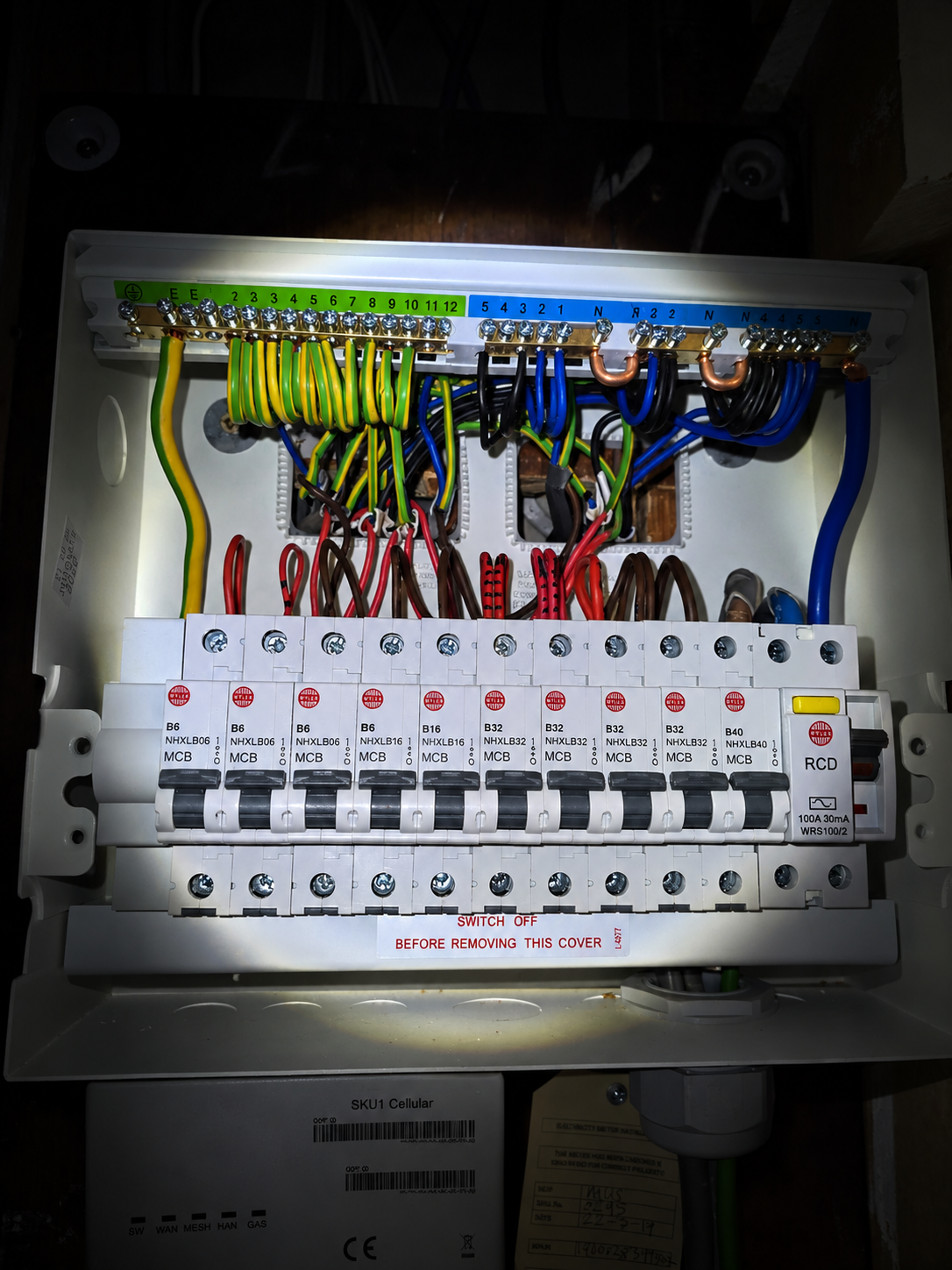
An EICR covers everything that's part of the building's electrical installation: the fuse board, the wiring, sockets, switches, light fittings and any fixed equipment. It doesn't test plug-in appliances, which are covered by portable appliance testing. The aim is to find anything that's damaged, deteriorated, dangerous or doesn't meet current safety standards.
The report records each defect with a code. C1 means danger is present and needs immediate action. C2 means potentially dangerous. C3 means improvement is recommended. FI means further investigation is needed. Any C1, C2 or FI makes the report unsatisfactory.
The most common causes
- Deteriorated insulationOld cables lose their insulating properties, showing up as low insulation resistance readings.
- Missing RCD protectionOlder installations often lack RCDs on sockets and other circuits that now require them.
- Damaged accessoriesCracked sockets, loose switches and broken fittings with exposed live parts.
- Poor earthing and bondingMissing or inadequate earthing and bonding to gas and water pipes increases the shock risk.
- Overheating signsScorching at terminals or in the fuse board shows connections that have been running hot.
- Unsafe alterationsDIY additions, overloaded circuits and work that doesn't meet the regulations.
How we fix it
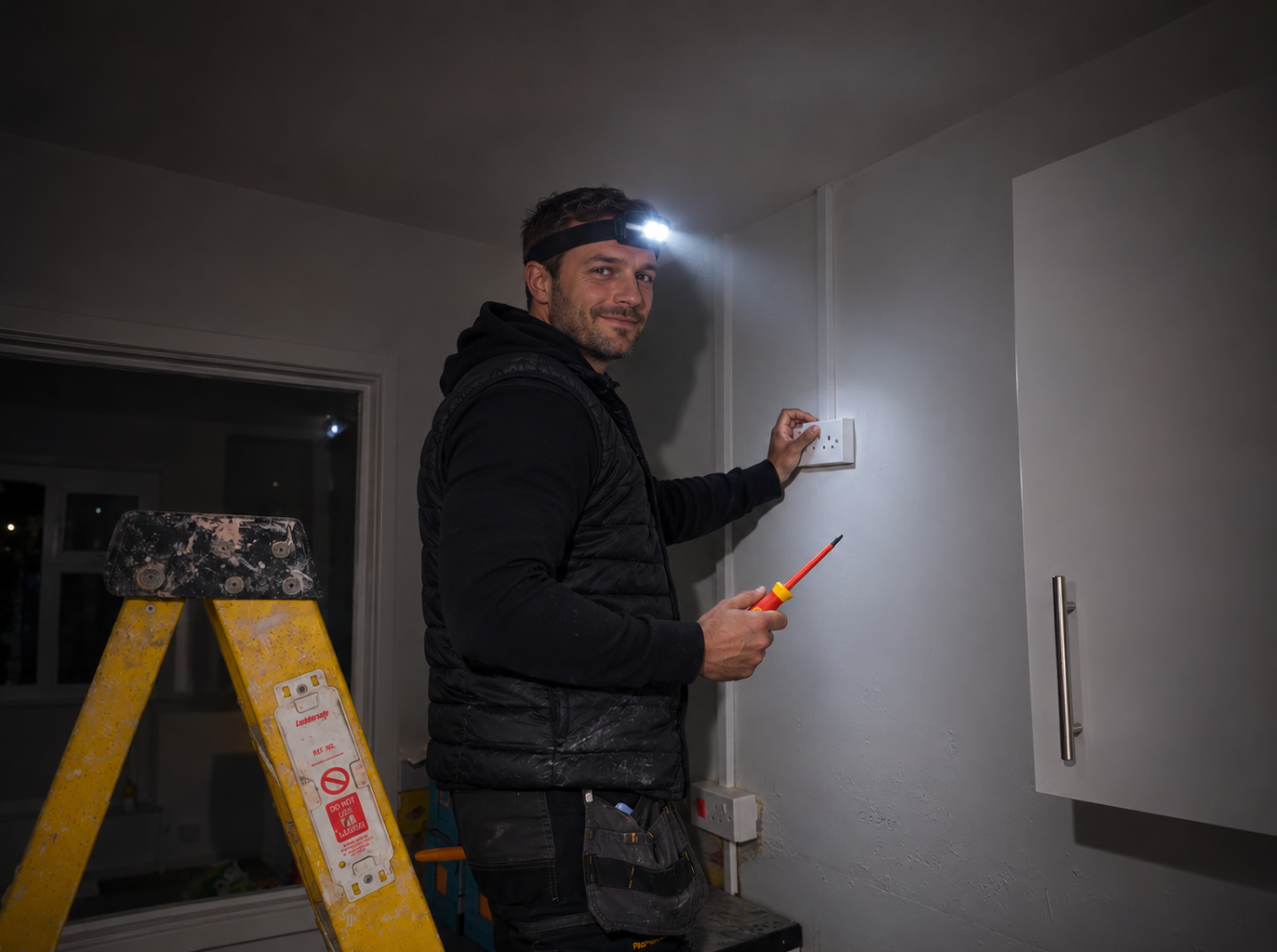
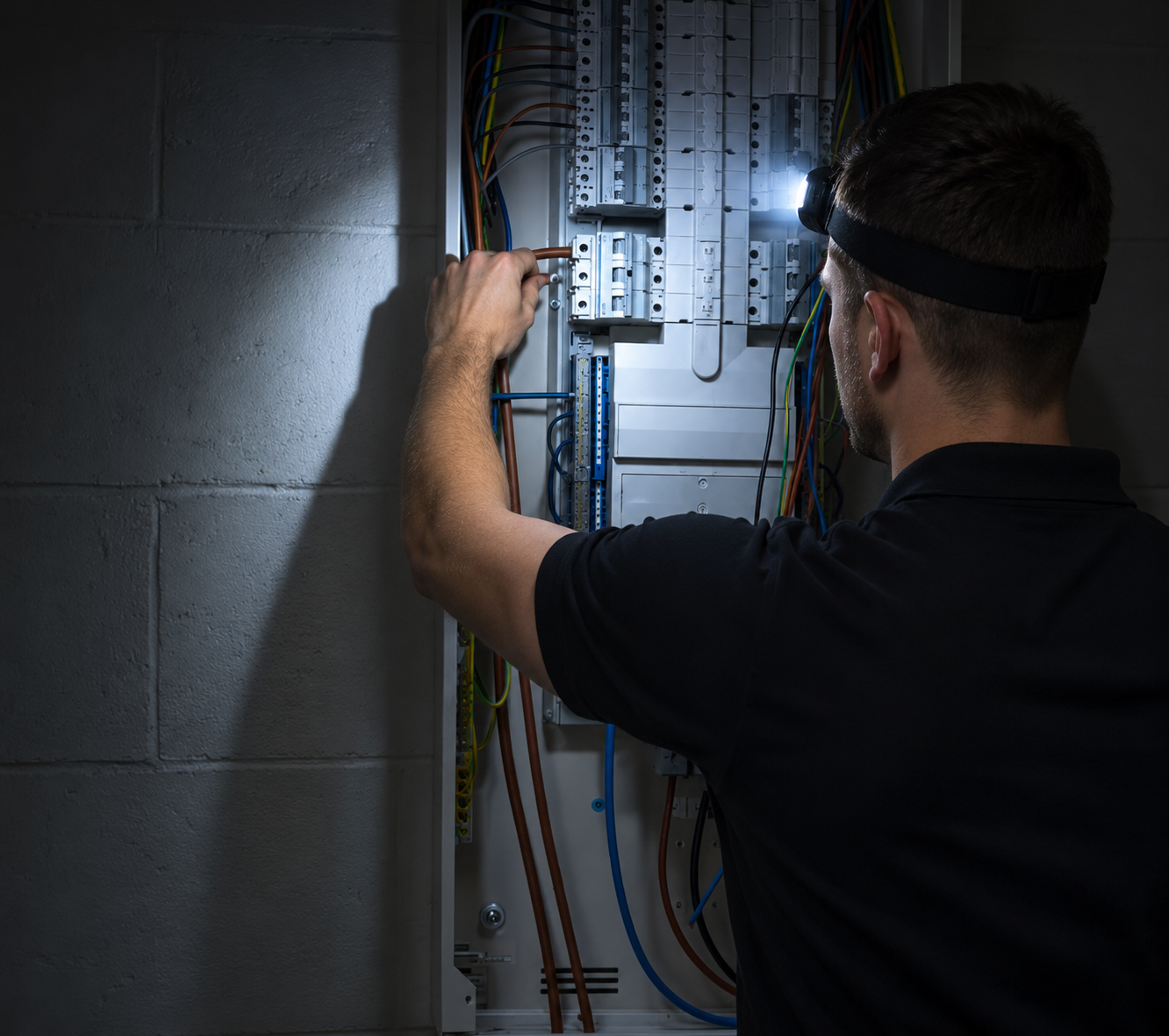
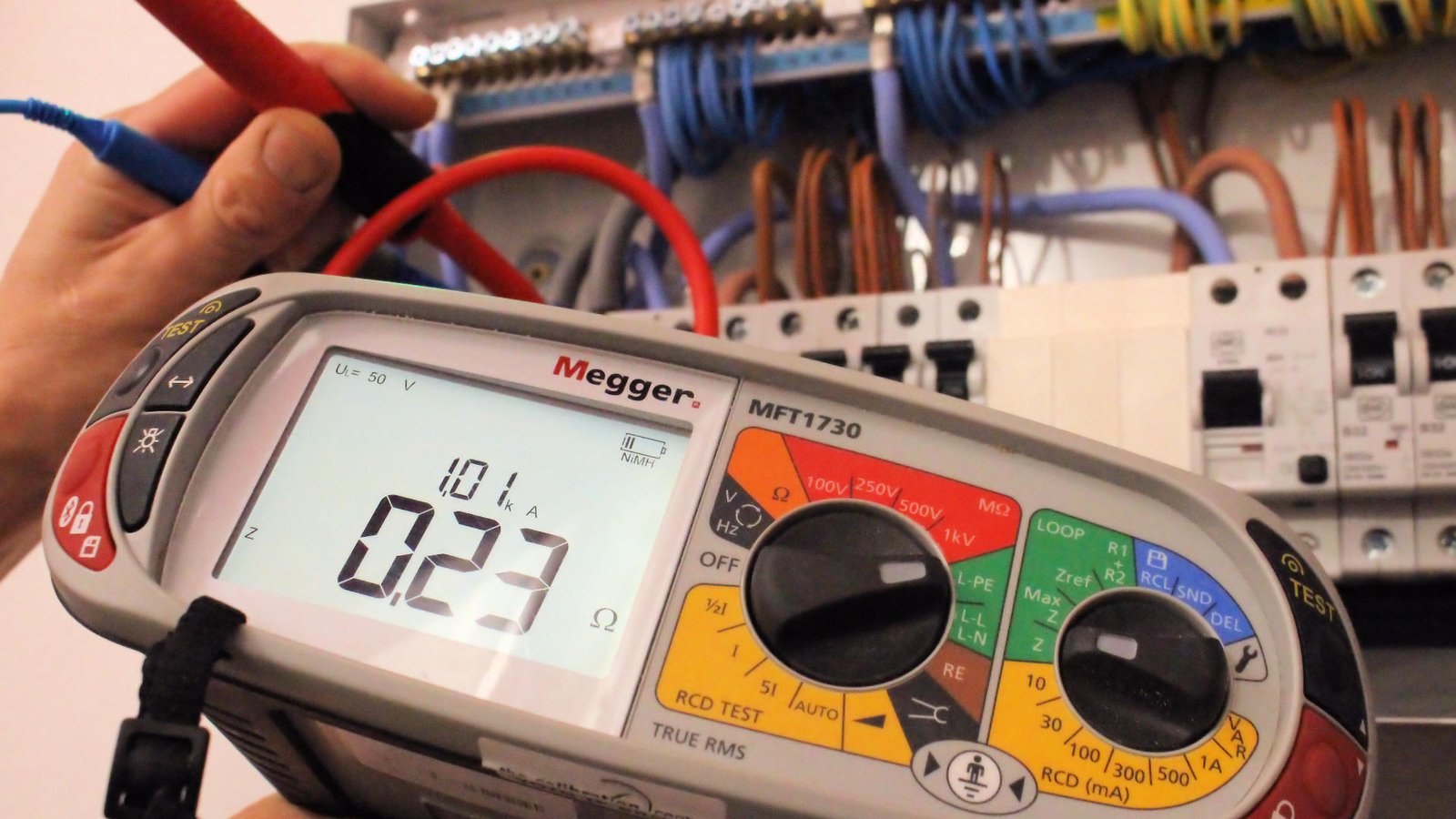
The inspection starts with a visual check of the fuse board, accessories and visible wiring. Then the power is switched off in stages while we test each circuit. We test continuity of earth conductors, insulation resistance between conductors, polarity, earth fault loop impedance and RCD operation, and record the results on the report.
If the report is unsatisfactory, we explain each defect in plain English and quote for the remedial work. Common fixes include replacing damaged accessories, adding RCD protection, upgrading the fuse board, improving earthing and bonding, or replacing deteriorated cables. Once the work is done, we re-test so you have the paperwork you need.
On the day
What an EICR involves
Here's what to expect when we carry out the inspection.
Visual inspection
We check the fuse board, sockets, switches and visible wiring for damage and wear.
Testing
The power is switched off in stages while we test each circuit.
Report
You get a written report that says whether the installation is satisfactory and lists anything that needs attention.
Remedial work
If anything fails, we can quote for the repairs and re-test once they're done.
Electrical emergency right now?
We're with you in 30 to 90 minutes, day or night.
Safety certificates
EICR and electrical safety certificates in Rye
An EICR is known by several names: an Electrical Installation Condition Report, an electrical safety certificate, a landlord electrical certificate, a periodic inspection, or an electrical safety check. They all describe the same thing: a full inspection and test of a property's fixed wiring.
We carry out landlord EICRs for rented homes, holiday lets and HMOs, electrical safety checks for homebuyers and sellers, and periodic inspections for homeowners in Rye, Camber, Winchelsea and the surrounding area. When you need one quickly, we can usually fit you in fast.
If your report highlights any problems, we can quote for the remedial work and re-test afterwards, so you get a satisfactory electrical safety certificate without having to find another electrician.
Questions
Frequently asked questions
How long does an EICR take?
It depends on the size of the property and the number of circuits. A typical home takes a few hours.
Will the power be off?
Yes, for parts of the test. We'll tell you when, and keep the time without power as short as we can.
What do the codes on the report mean?
C1 means danger present, C2 potentially dangerous, C3 improvement recommended and FI further investigation needed. A C1, C2 or FI makes the report unsatisfactory.
How often do I need one?
Rented homes need one at least every five years. For owner-occupied homes, every ten years is the usual guidance, or when you move.
More help